Evaluating what resists measurement: The iMEL framework in a youth-centered placemaking program in Colombia
con Estefany Peña y Natalia Senejoa. En evaluación, Evaluation (2026).
Investigación
Artículos con revisión de pares, libros e informes de política sobre tierra, conflicto, economías rurales y la medición de resultados de desarrollo.
Explorar por tema

con Estefany Peña y Natalia Senejoa. En evaluación, Evaluation (2026).
con Raquel Sofía Zapata-Valencia y Anabelle Couleau. En evaluación, Agricultural Economics (2026).
con Lukas Kleine-Rueschkamp, Jesse d'Anjou y Andrés Sánchez-Saldarriaga. Enviado (2026).
Peace agreements impose transition periods during which armed actors retain coercive capacity before disarming. We test whether paramilitaries in Colombia exploited this window by studying the 2003–2006 demobilization of 37 AUC blocks. Exploiting quasi-random variation in demobilization timing in a staggered difference-in-differences design, we find that paramilitaries increased land expropriation by approximately 30 percent in the three years preceding demobilization (Sun–Abraham ATT = 0.589, SE = 0.175). The effect concentrates on agriculturally productive land and does not extend to displacement or other assets, confirming economic greed as the mechanism. Results survive HonestDiD sensitivity analysis, wild cluster bootstrap inference, spatial HAC standard errors, and count-data models. The negative TWFE coefficient is an artifact of forbidden comparisons resolved by heterogeneity-robust estimators (Callaway–Sant'Anna 2021). The transition period length is a critical design parameter: prolonged negotiations allow armed actors to front-load expropriation before disarmament, generating land inequality and increasing the risk of conflict recurrence.
con Eduard Martínez-González y María del Pilar López-Uribe. Documentos CEDE 2026-37, Universidad de los Andes; en revisión, Journal of Public Economics (2026). hdl:1992/79361; ssrn:7133959
This paper estimates the effect of land property rights on illicit crop cultivation under weak institutions. We study Formalizar para Sustituir (FxS), a Colombian program that allocated land titles to farmers in coca-producing areas as part of the 2016 peace agreement with the FARC. Matching administrative titling records to annual high-resolution satellite imagery of coca fields at the 1 km × 1 km grid level, we compare titled grids to neighboring non-titled grids over 2011-2021 using a difference-indifferences design. Land titling reduces coca cultivation by 42-64% immediately, but the effect fades within two years. In the short term, titled households increase credit demand and investment in productive activities, and report incomes above what coca farming generates. These changes are consistent with property rights operating through the channels theory predicts, yet they are insufficient to sustain substitution on their own. The FxS×Placa-Huella interaction coefficient (ψ) implies an additional sustained reduction of 33-38% relative to the pre-treatment coca mean in grids that combine land titling with tertiary road construction, suggesting that connectivity to local markets is the binding constraint for long-run transition away from illicit crops. Roads alone, by contrast, are associated with more coca-a result consistent with prior evidence that infrastructure without institutional preconditions benefits illegal as much as legal activity.
con Gustavo García, Albert Saiz, Juliana Lalinde-Velásquez y Daniela Mejía-Tejada. Documento de trabajo SSRN (2025). ssrn:5387296
Are investments in urban slum housing connected to well-being? Previous research has focused on infrastructure, such as roads, sewage systems, and electricity, as well as title formalization. However, the impact of the highly-variable quality of dwellings is not fully understood, partly because gang violence has impeded fieldwork. Working with local organizations, we deployed teams of engineers into Colombian informal dwellings, allowing us to quantify their indoors investment deficits and to collect data from a novel household survey. We also trained an LLM using 11,000 photos taken by our field team, producing indoor and exterior AI quality ratings that are highly correlated with expert assessments. In turn, our investment metrics are important determinants of hedonic rental valuations. We find neighborhood violence to be associated with poor mental and physical health. Steep terrain and higher housing investments are associated with greater satisfaction with one's home. Contrary to concerns about crowding, unit size does not predict improved well-being. Surprisingly, only subjective assessments of housing satisfaction stand as significant and consistent predictors of positive family outcomes.
con Daniela Mejía-Tejada, Daniel A. Rodríguez-Arbeláez, Nicolás Valbuena, Karen González, Stefany López, Lina Salazar, Gonzalo Rondinone, Rafael I. Parra-Peña y Carmine P. De Salvo. IDB Working Paper (2026). doi:10.18235/0014440
Agricultural price stabilization policies are widely used to protect farmers from market volatility, yet their long-term consequences for production incentives and market efficiency remain poorly understood. This paper provides the first causal evaluation of Colombia's Dry Paddy Rice Storage Incentive Program, examining whether short-term price stabilization generated unintended distortions throughout the rice value chain. Using a Regression Discontinuity Design combined with Regression Kink Design on monthly data from 2013-2025, we estimate the program's effects on producer prices, farm revenues, production decisions, and consumer price transmission. The results show that the program achieved its primary objective of mitigating seasonal price declines and increasing producers short-term revenues. However, these gains came at the cost of altered production incentives. Higher expected returns encouraged additional planting, contributing to oversupply in subsequent harvests and reinforcing dependence on recurrent government intervention. While the program stabilized producer prices, it also weakened price transmission to consumers, limiting broader welfare gains and reducing market efficiency. These findings reveal a fundamental trade-off inherent in commodity price stabilization policies: interventions that effectively protect farmers in the short run may simultaneously create incentives that undermine long-run market adjustment and fiscal sustainability. Beyond the Colombian case, the study contributes causal evidence to the broader debate on agricultural stabilization policies in developing economies and highlights the importance of complementing temporary market support with investments that enhance productivity, competitiveness, and structural resilience.
con Mónica Almonacid y Laura Peña. Documento de trabajo SSRN (2026). ssrn:6570319
Cadastral modernization-updating assessed property values after decades of stagnationcreates a structural dilemma for local governments: better data generates larger fiscal shocks that can trigger the taxpayer resistance that undoes the reform itself. This paper develops a decision-support framework that resolves this dilemma by optimizing property tax rate schedules to be simultaneously revenue-adequate, equity-preserving, and legally compliant under taxpayer-protection constraints. Applied to 929,703 properties across 88 municipalities in Antioquia, Colombia-where a 2024-2025 update nearly doubled the aggregate tax base-three findings emerge. First, the equity-revenue trade-off is far more favorable than current ordinances imply: the median municipality can increase revenue by 7.6% while reducing the residential tax burden. Second, current rate schedules are structurally obsolete and latently regressive, averaging 50 tariff combinations calibrated to 1990s nominal property values. Third, from a fiscal restructuring perspective, the simpler and cheaper land-value-only catch-up update mechanism (PND catch-up) is associated with comparable or higher fiscal restructuring potential than full cadastral modernization-a finding about rate-design 1 Muñoz-Mora, Almonacid & Peña The Property Tax Modernization Dilemma returns, not about the overall value of comprehensive modernization. The framework is replicable by any subnational government with access to digitized property-level cadastral records, retrievable rate ordinances, and administrative tax-liability data of adequate quality.
con Ana María Arcila-Agudelo, Harold Cardona-Trujillo et al. Documento de trabajo SSRN (2026). ssrn:6381888
People often use simple rules of thumb to decide what to eat, yet these “healthy eating” beliefs can drift away from everyday constraints. In rural Colombia, we explored how adults define healthy eating, what an “ideal day of eating” looks like in practice, and what barriers shape everyday food choices and eating routines. We conducted participatory co-design workshops with 41 adults (18–70 years old) across three rural subregions of Antioquia. Using visual food models, groups built ideal meals and menus, rated how closely their usual diets matched those ideals (1–5 scale), and discussed what helped or hindered alignment. We then used Colombian food composition data to benchmark the co-designed menus against national food-based dietary guidelines and recommended nutrient intake. Participants consistently framed healthy eating as “fresh” and “home-prepared.” Still, their ideals often left less room for vegetables and dairy than guidelines suggest and often exceeded recommended sodium limits. Self-ratings clustered around 2.5–3.5/5, indicating a perceived gap between intentions and everyday eating. Barriers were described less as a lack of knowledge and more as affordability, limited access and time, entrenched habits, and emotional strain. Pairing participatory elicitation of meal ideals with nutritional benchmarking helps to identify decision rules and real-world constraints that interventions can target to support healthier food choices in rural settings.
con Harold Cardona-Trujillo y Paula Andrea Restrepo-Areiza. Documento de trabajo SSRN (2026). ssrn:6188818
The European Union Deforestation-Free Products Regulation (EUDR), which will enter into force on December 30, 2026, represents a critical turning point for the Colombian coffee sector. This study analyzes the implications of the EUDR for the country’s 540,000 coffee producers, of whom 96% are smallholders cultivating less than five hectares. Through an extensive review of academic literature, regulatory documents, and sectoral data, the article examines the regulation’s fundamental paradox: while it seeks to promote environmental sustainability, its compliance requirements—precise geolocation, land tenure documentation, full traceability, and verification of “labor rights”—threaten to exclude precisely the most vulnerable producers, who grow coffee in biodiverse agroforestry systems. The study identifies five critical structural barriers: (1) land tenure informality affecting 52% of rural properties; (2) regressive compliance costs of USD 105,000–215,000 for cooperatives of 500 farmers; (3) regulatory ambiguity regarding “fair pay” and labor rights requirements; (4) inadequate institutional capacity for farm-level labor verification; and (5) an impossibly compressed implementation timeline. The analysis reveals that, without urgent intervention, up to 280,000 coffee-farming families (50% of the sector) face the risk of exclusion from the European market, which accounts for 30% of Colombian coffee exports (USD 580–700 million annually). The article concludes that equitable implementation of the EUDR requires massive financing for smallholders, accelerated land formalization, clarification of labor requirements, and cost-redistribution mechanisms along the value chain. Without these adjustments, the EUDR may exacerbate the North–South inequalities that have historically characterized global coffee value chains, transforming a well-intentioned environmental regulation into a mechanism of economic concentration and social exclusion.
con Albert Saiz, Juliana Lalinde-Velásquez, Daniela Mejía-Tejada, Gustavo García y Marcela Ibáñez. Documento de trabajo SSRN (2026). ssrn:6399298
We evaluate a qualitative housing improvement programupgrades to kitchens, floors, and bathrooms-using a cluster randomized controlled trial with 1,163 low-income urban households across three Colombian cities. The Hogares Saludables program, implemented by a private-sector firm, combines physical improvements with a 40-hour construction and life skills training course. Using difference-indifferences with propensity score matching to address baseline imbalances, we find that the intervention improves mental health (+0.054, p < 0.01), reduces fever among children under six (20.2 pp, p < 0.05), lowers unemployment (8.6 pp, p < 0.01), decreases debt (15.7 pp, p < 0.01), and raises income expectations (16.0 pp, p < 0.05). Effects on cleaning and aspirations are larger for female-headed households and those with children. We find no effects on domestic violence or family harmony. Thirty-one percent of treated households undertook additional home improvements after the intervention, suggesting that interior housing upgrades act as a catalyst for continued investment and community engagement.
con Marco Giani, Philip Verwimp, Daniela Mejía-Tejada y Laura Quintero. Documento de trabajo SSRN (2026). ssrn:6441737
KAP (knowledge-attitude-practice) surveys are the primary tool for identifying parenting program targets in low-income countries, yet question order is rarely treated as a consequential design parameter. We treat the questionnaire itself as the treatment: a 2x2 randomized factorial experiment embedded in a UNICEF household survey in Burundi (N = 751 households with children under six) varies the order and spacing of attitude and behavior modules. Placing behavioral questions before attitudinal questions increases attitude-behavior consistency by 0.67 points on a 16-point scale (30% of one SD; p_{WCB} = 0.029); spacing has no effect. The order effect holds across parenting domains. An order x spacing interaction is suggestive but not confirmed under cluster-robust inference (p_{WCB} = 0.195). The pattern is consistent with behavioral anchoring. Because question order is rarely documented in KAP survey reports, measured attitude-behavior gaps --- and the program beneficiaries classified on that basis --- may depend on an undocumented design choice.
con Harold Cardona-Trujillo y Paula Restrepo. Documento de trabajo SSRN (2026). ssrn:6635998
Documento de trabajo SSRN (2026). ssrn:6388419
Social Return on Investment (SROI) has become one of the most widely applied social value measurement frameworks in the nonprofit and public sectors, yet whether practitioners actually comply with its governing principles at scale is unknown. This paper fills that gap with the first large-scale content analysis of 383 SROI practitioner reports drawn from the Social Value UK database. Using a three-method quality scoring design-keyword upper bound (40.4%), LLM systematic coder (18.6%), and expert-calibrated classifier (20.2%)-we bound compliance with Social Value International's eight guiding principles. Compliance is lowest precisely where SROI is most consequential: the "do not over-claim" principle (LLM: 11.2%) and materiality (2.9%), consistent with Ebrahim's (2005) accountability myopia prediction that organizations comply with principles visible to funders while avoiding those that reduce headline ratios. OLS regressions confirm that formal assurance raises quality (= 10.36 pp, p < .001), but even assured reports reach only 22.9% of the maximum standard. A Monte Carlo simulation-calibrated to empirical distributions of deadweight (median
con Richard Akresh y Philip Verwimp. En curso.
Environmental Research Communications 8(8), 085026
Among 806 smallholder households in Antioquia, Colombia, only 28% adopt at least one climate adaptation strategy despite widespread exposure to climate risk. We estimate two logistic regression models—one for overall adaptation and one for land-focused adaptation among landowners—with explanatory variables selected via group LASSO. Each additional unit on a six-item climate perception index raises the adaptation probability by 6.5% points in Model 1 and 6.9% points in Model 2. Education, land assets, and access to basic services further predict adoption. Households with better housing conditions—a proxy for wealth—are less likely to adopt land-based strategies, suggesting that wealthier households diversify livelihoods rather than adapt farming practices. Both models show adequate calibration (Hosmer–Lemeshow ¡mml:math xmlns:mml="http://www.w3.org/1998/Math/MathML" overflow="scroll"¿ ¡mml:mrow¿ ¡mml:mi¿p¡/mml:mi¿ ¡mml:mo»¡/mml:mo¿ ¡mml:mn¿0.14¡/mml:mn¿ ¡/mml:mrow¿ ¡/mml:math¿ ) and good discriminatory power (AUC: 0.79 and 0.84). These patterns call for differentiated interventions: targeted information campaigns, financial products matched to adaptive investment scales, and support for the community institutions that diffuse adaptive knowledge.
Economic History of Developing Regions 40(1), 49–79
This article provides new evidence for the effects of land inequality on human capital formation using the case of Colombia in the first half of the twentieth century. The paper studies this causal effect by exploiting a new historical database and creating a measure of land tenure based on subnational taxable land. The analysis applies multiple empirical strategies to demonstrate that low levels of land inequality are related to growth in literacy rates and better performance in variables such as enrolment and expenditure on education. Additionally, we analyse the relevance of the mechanism behind this relationship by identifying the effects of educational supply and demand through the heterogeneous impact on gender, rurality, and industrial employment. The results show that the demand side is prominent. The findings are in line with growing evidence of the perverse effects of land inequality on the formation of human capital in inegalitarian, poor, and rural societies.
The Journal of Public Space 10(1), 107–116
Urban youth-led placemaking programs present unique challenges in monitoring, evaluation, and learning (MEL) due to the diverse socio-political and cultural contexts in which they operate. Standardized evaluation frameworks often struggle to accommodate these variations, making it even more complex when working across multiple countries with distinct youth realities. This article advocates for an adaptive MEL framework, drawing from the S2Cities programme—a cross-country initiative integrating participatory methods with robust evaluation strategies. Key learnings highlight the necessity of real-time adaptation to local youth experiences, the need to balance standardized evaluation with localized indicators, and the critical role of young people as co-creators in MEL processes. These insights underscore the importance of a flexible yet rigorous framework that captures urban dynamics' evolving nature. By embedding adaptability into MEL, policymakers and practitioners can enhance the impact, relevance, and responsiveness of placemaking initiatives tailored to youth engagement.
Small Business Economics 66(2), 565–588
Given institutional incentives, is entrepreneurship always good for the economy? While the literature about its benefits for society is extensive, a salient lacuna exists regarding the negative side of entrepreneurship. This study, hence, explores how institutions condition destructive entrepreneurial activity, which is linked to the economic growth of Colombian regions. Institutional economics helps us understand the underlying relationships, which are tested through 3SLS, on a sample of 1122 municipalities in Colombia. We show that a negative effect of new coca crops (as destructive entrepreneurship) on regional economic growth exists, but it is conditioned by the institutional reinforcement and integral performance index (as formal institutions), as well as historical land conflict and hectares of land belonging to religious sects (as informal institutions). Other forms of (destructive) entrepreneurship are therefore envisioned and put in place for the continued development of the current literature and the management of public policy.
International Journal of Public Health 69, 1606689
Objetives The adoption of vaccines was a crucial factor in overcoming the COVID-19 pandemic. However, vaccination rates between rural and urban areas varied greatly. In this paper, our objective is to understand the individual and institutional factors associated with the uptake of vaccines in remote rural areas in Colombia. Methods We interviewed a random sample of 800 households (1,592 individuals) in remote rural areas of Antioquia (Colombia) during February 2022 when vaccinations were available. Then, we use a linear probability model to explain the uptake of the COVID-19 vaccine. Results The results indicate that the probability of having at least the first dose of the COVID-19 vaccine is positively associated with access to information, trust in police and army, and the perceived risk of contracting COVID-19. Trust in the church is negatively related to vaccination. Conclusion Institutions can play a critical role in the management of pandemics. Timely information on the risks associated with the disease and perceived riskiness are key factors that mobilize the population to take the COVID-19 vaccine.
Entrepreneurship & Regional Development 37(3-4), 350–374
Little is known about the coexistence and possible substitutability of destructive and productive entrepreneurship in regions characterized by weak institutions. This study explores the role of institutions in the interplay between destructive entrepreneurial activity (i.e. new coca crops share) and productive entrepreneurship (i.e. new coffee crops share) in rural Colombia. Institutional economics is used to frame our analysis, which is supported by an empirical spatial Durbin model. Using data from the municipal level of the Coffee National Information System during the 2000–2010 period, we found that destructive entrepreneurship has directly displaced productive entrepreneurship and the other way around. Although it is hypothesized that the presence of coffee-supportive institutions such as extensionists (i.e. regional representation of the national coffee association) mitigates the relationship between these entrepreneurial activities in favour of productive entrepreneurship, our results show that institutions are insufficient to control the crowding-out effect of destructive on productive entrepreneurship. The theoretical and policy implications of the study are considered in light of these findings.
International Interactions 49, 201–236
How are patterns of armed control and dispute by armed actors related to land concentration, land property rights, and distribution? We argue that armed actors affect land tenure by using different land transfer mechanisms to distribute the land, which reflects the dynamics of control and dispute during civil conflict. We test this argument by studying the case of Urabá, a region in northwestern Colombia, using a mixed-method strategy. First, using extensive qualitative fieldwork, we find that armed actors systematically applied different land transfer mechanisms in areas where they held control. Armed actors strategically changed from employing one land transfer mechanism to another in relation to the level of dispute, political and economic objectives, and alignment with the state, among others. In our fieldwork, we identify how these land transfer mechanisms led to patterns of territorial control and land tenure structure. We then analyze an original dataset of rural plot ownership in Urabá, based on official cadastral information, to empirically verify our qualitative findings. We estimate a village-level fixed effects model that shows that disputed territories and those under paramilitary control had larger plots, higher land inequality, and fewer land transfers. In contrast, territories with established control by left-wing insurgents exhibit a small landholder scheme. These results offer important insights into the relationship between civil armed conflict and land and the logic of rebel governance.
International Journal of Entrepreneurial Behavior & Research 28, 78–103
Purpose:Motivated by a lack of evidence regarding the effect of migration on entrepreneurship in a highly informal country, such as Colombia, this paper has a twofold purpose. First, it explores how Venezuelan immigration affects entrepreneurial activity in Colombian regions. Second, it intends to shed light on this relationship, by distinguishing between formal and informal sectors. Design/methodology/approach: With a sample of 1,776,063 individuals, from the Labor Survey Gran Encuesta Integrada de Hogares (GEIH) from the Departamento Administrativo Nacional de Estadística (DANE), the authors employ an instrumental variable approach to account for the selection of immigrants into locations with more or less desirable conditions. Findings: The results suggest Venezuelan immigration positively influences self-employment and own-account workers, but negatively affects employers. However, once these immigrants proliferate in the informal sector, the effects increase. Originality/value: This paper brings new insights into the intersection between immigration, unofficial economies, and entrepreneurship. First, while the prior literature focuses on migration from developing to developed countries, migratory flows between developing economies and its effects on local entrepreneurial activity remain unexplored. Second, although informality is mostly common in developing countries, little (albeit growing) evidence of its role in the relationship between migration and entrepreneurship research exists. Finally, the authors bring together these two phenomena to enhance our understanding of different types of entrepreneurial activities when immigration and informality take place. Policy implications are derived from these insights.
Frontiers in Forests and Global Change 16
Trees on farms provide livelihood benefits to households across Africa. To date, however, evidence on how such trees affect household wellbeing over time remains lacking. Evidence is especially sparse at the national level where it has particular value for policymaking. To address this knowledge gap, we use nationally-representative panel data from Uganda to examine how on-farm tree growing may affect two dimensions of household welfare income and food security and nutrition. We analyzed household-level data from the 2005-06 and 2013-14 Ugandan National Panel Surveys, including measures on adoption and abandonment of trees on farms, demographic factors, and other socio-economic variables. We used difference-in-difference and probabilistic models to assess the relationship between the area devoted to trees on farms for the 1077 households in our sample and household income and nutrition outcomes. Our results suggest that improvements in both total household consumption and nutritional outcomes—specifically, children under five being moderately under-weight and moderate wasting—were associated with having on trees on farms, especially fruit trees. These findings suggest the potential importance of trees on farms to poverty reduction and sustainable development efforts in Uganda and other countries.
International Journal of Environmental Research and Public Health 16(19), 3578
A community food environment plays an essential role in explaining the healthy lifestyle patterns of its community members. However, there is a lack of compelling quantitative approaches to evaluate these environments. This study introduces and validates a new tool named the facility list coder (FLC), whose purpose is to assess food environments based on data sources and classification algorithms. Using the case of Mataró (Spain), we randomly selected 301 grids areas (100 m2), in which we conducted street audits in order to physically identify all the facilities by name, address, and type. Then, audit-identified facilities were matched with those automatically-identified and were classified using the FLC to determine its quality. Our results suggest that automatically-identified and audit-identified food environments have a high level of agreement. The intra-class correlation coefficient (ICC) estimates and their respective 95% confidence intervals for the overall sample yield the result “excellent” (ICC ≥ 0.9) for the level of reliability of the FLC.
Journal of Development Studies 54(6), 1019–1040
This paper investigates the food security and nutritional status of formerly displaced households (HHs). Using the 2006 Core Welfare Indicator Survey for Burundi we compare their food intake and their level of expenses with that of their non-displaced neighbours. We test whether it is the duration of displacement that matters for current food security and nutritional status or the time lapsed since returning home. We use log-linear as well as propensity score matching and an instrumental variable-approach to control for self-selection bias. We find that the individuals and HHs who returned home just before the time of the survey are worse off compared to those who returned several years earlier. On average, the formerly displaced have 5 per cent lower food expenses and 6 per cent lower calorie intake. Moreover, we find evidence in favour of duration of displacement as the main mechanisms through which displacement affects HH welfare. Results are robust after controlling for self-selection bias. Despite international, government and NGO assistance, the welfare of recent returnees is lagging seriously behind in comparison with the local non-displaced populations.
World Development 103, 268–283
This paper examines the effect of the formalization of land property rights in the war against illicit crops, using the case of Colombia. We argue that as a consequence of the increase in state presence and visibility, municipalities with a higher level of formalization of their land property rights witnessed a greater reduction in the area allocated to illicit crops. We hypothesize that this is due to the possibility of obtaining more benefits in the newly installed institutional environment when land is formalized, and the increased cost of growing illicit crops on formal relative to informal land. We find that a one-standard-deviation increase in the formality index for smallholders is related to a reduction in the share of municipal area allocated to coca crops of 0.101 percentage points. That is, the formalization of one additional hectare of land with respect to small landholders in an average municipality in the year 2000 is associated with a decrease of approximately 1.4 hectares of land allocated to coca within that particular municipality, ceteris paribus. These results remain robust to a number of sensitivity analyses. Our findings contribute to empirical evidence on the positive effects of formal land property rights and effective policies in the war on drugs.
Forest Policy and Economics 84(7802), 47–61
Trees on farms are often overlooked in agricultural and natural resource research and policy in Sub-Saharan Africa. This article addresses this gap using data from the Living Standards Measurement Study-Integrated Surveys on Agriculture in five countries: Ethiopia, Malawi, Nigeria, Tanzania, and Uganda. Trees on farms are widespread. On average, almost a third of rural smallholders grow trees. They account for an average of 17% of total annual gross income for tree-growing households and 6% for all rural households. Gender, land and labor endowments, and especially forest proximity and national context are key determinants of on-farm tree adoption and management. These new, national-scale insights on the prevalence, economic contribution and determinants of trees on farms in Africa lay the basis for exploring the interaction of agriculture, on-farm tree cultivation, and forestry to gain a more complete picture of the dynamics of rural livelihoods across the continent and beyond.
Ensayos en Economía Cafetera
Este artículo examina el efecto del conflicto armado y la presencia de cultivos ilícitos en la producción cafetera Colombiana. El incremento de la presencia de grupos armados y de cultivos ilícitos en las regiones cafeteras genera una dinámica adversa debido a que modifica las decisiones de producción de los productores de café. Este artículo utiliza el Censo Cafetero 1993/97 y el Sistema de Información Cafetera (SICA) para el 2008 con el fin de evaluar el impacto del conflicto sobre la producción cafetera. La estructura de información permite estimar la relación entre café y conflicto armado en dos momentos: i) la probabilidad de continuar en la producción; y ii) el porcentaje de la finca cultivado en café. Las estimaciones se realizaron con un modelo de selección en dos etapas. Los resultados sugieren que una intensificación de la violencia reduce la probabilidad de continuar en la producción cafetera entre 1998 y 2008 y, asimismo, el porcentaje de la finca cultivado en café. Los resultados de la presencia de cultivos ilegales no son concluyentes.
ECOS de Economía
El artículo analiza las relaciones existentes entre los niveles de inversión en salud y educación por parte de los municipios, y el recaudo del impuesto predial. Se utiliza la metodología de panel de datos, entre los años 2000 y 2008, en una muestra de 97 municipios del departamento de Antioquia (Colombia). De acuerdo con los resultados, se logra determinar que no existe ninguna relación entre los niveles de inversión autónoma en educación y el recaudo de impuesto predial; por otra parte, respecto a las inversiones en salud, se identifica que el recaudo del impuesto presenta una relación negativa con las inversiones autónomas. Finalmente, como una extensión del alcance inicial planteado, se logró determinar una relación positiva entre el recaudo de impuesto predial y las inversiones en desarrollo de vías e infraestructura.
Suma de Negocios 21–31
La consolidación de mercados de tierra en economías en países en vías de desarrollo es una alternativa de crecimiento necesaria y viable que requiere, entre otros elementos, la comprensión de los mecanismos de generación de precios de la tierra rural. En la ciencia económica existen diversas metodologías para la aproximación de la valoración de los predios rurales, los cuales debido a sus particularidades hacen imposible asignarle un mercado tradicional. El presente artículo realiza un recorrido por los principales desarrollos de las metodologías de valoración de predios rurales. Se presentan los métodos tradicionales de retornos esperados y métodos alternativos de inclusión de características no-mercadeables, haciendo especial énfasis en la metodología de precios hedónicos como alternativa que integra diferentes variables para asignar un valor a la tierra. La revisión de la literatura para Colombia muestra una importante ausencia de trabajos que permitan comprender los mecanismos de generación de precios para los predios rurales en el país, lo cual se constituye en un probable obstáculo para el desarrollo rural.
Revista Facultad Nacional de Salud Pública
La presencia de problemas respiratorios en zonas con alta contaminación se relaciona con factores como la exposición, la susceptibilidad y la capacidad de respuesta por parte de los individuos. OBJETIVO: presentar evidencia estadística de cómo la probabilidad de presentar un síntoma o enfermedad está relacionado con la exposición, la susceptibilidad y la respuesta social de individuos expuestos a la contaminación por material particulado. METODOLOGIA: se emplea información única de una encuesta a 1.000 individuos expuestos en el centro de Medellín para realizar un análisis descriptivo y modelos de respuesta binaria probit. Se analizaron 27 modelos para las siguientes variables dependientes: presenta un síntoma o enfermedad (EMF), presenta un síntoma (LEVE) y presenta una enfermedad (GRAVE). RESULTADOS: se evidencia que la exposición es una variable clave en la presencia de problemas respiratorios (vulnerabilidad), pero que los individuos expuestos pueden presentar problemas en salud debido no solo a la contaminación per se, sino a condiciones personales y sociales implícitas.
ECOS de Economía
Este artículo busca proponer alternativas de enseñanza para un curso de Introducción a la Economía, utilizando la herramienta de la Economía Experimental. De este modo, se introducen dos juegos Holt (1996) y Goeree and Holt (1999) en tres grupos distintos, los cuales se centran en los conceptos de mercado, leyes de oferta y demanda, producción agregada, empleo y precios. Estos juegos fueron aplicados a los estudiantes del curso de Introducción a la Economía de los programas de Administración de Negocios, Contaduría y Negocios Internacionales de la Universidad EAFIT en el semestre I de 2011. Aunque los resultados son preliminares, sugieren un efecto positivo en la comprensión de los conceptos y la aproximación y recordación de los estudiantes de la lógica del pensamiento económico.
Ensayos de Economía Cafetera
El presente trabajo aporta en la compresión de los canales de la violencia sobre el sector agropecuario a nivel microeconómico, para el cual no existen trabajos similares que aborden los efectos del conflicto armado sobre las decisiones productivas de los hogares campesinos colombianos. Para el sector cafetero, realiza una contribución en determinar los efectos de la violencia sobre la producción y el papel de la Federación en su mitigación.
Ensayos de Política Económica
Los caminos del café busca analizar las implicaciones microeconómicas del conflicto armado rural en la decisión productiva de los campesinos cafeteros colombianos. La hipótesis asume que el conflicto armado y la presencia de cultivos ilícitos crean entornos persistentes y sistemáticos de incertidumbre social, política y económica en las regiones cafeteras, lo cual genera ambientes de fragilidad que, sumados a las diferentes crisis de mercado, configuran un escenario desfavorable en el que el pequeño campesino se ve obligado a cambiar sus decisiones de producción. Se propone estimar la función de producción cafetera utilizando OLS y fronteras estocásticas de producción. Este último modelo permite hacer una estimación consistente de la función de producción y una aproximación a la eficiencia productiva de los cafeteros. Se usa una base de datos única con información por finca cafetera para 2006. Los resultados sugieren que existe una relación negativa entre el número de ataques y la producción de café y, en consecuencia, en los municipios con mayor número de ataques la producción es hasta 1,2 por ciento menor que la de otros municipios.
Ecos de Economia 12(26), 71–107
El presente trabajo analiza la relación entre la concentración de la propiedad rural y el producto agrícola para el departamento de Antioquia y se plantea una metodología para la validación de esta relación a nivel estadístico. Además, se desarrolla una descripción por subregiones de la estructura productiva y de la propiedad rural y se hace una reflexión, a partir de la relación planteada, sobre las políticas adecuadas para promover en la región una estructura de propiedad equitativa. Se encontró que la situación de la producción agrícola es precaria, lo cual pone en peligro la sostenibilidad ambiental y productiva de la región y motiva niveles de desigualdad entre las subregiones. Este deterioro de la producción va aparejado a altos niveles de concentración de la propiedad, provocando con ello un deterioro de la mediana propiedad y el aumento de los minifundios.
Lecturas de Economía
The Environmental Kuznets Curve hypothesis suggests the existence of an inverted U-shaped relationship between environmental degradation and income. Several economists assume that the environmental impacts occurred during the first stages of the development process will be reverted as a result of economic growth. Yet Perman and Stern (2003) have argued that the econometric methods used in the earlier analysis of the EKC are inappropriate, given the time properties of the series. This article examines the appropriateness of the EKC for a panel of 46 countries and 21 periods by implementing individual and panel tests for unit roots and cointegration. An error correction model is also estimated. The results do not support evidence of a common EKC for the countries analyzed.
Lecturas de Economía 66
El desplazamiento forzoso es un fenómeno mundial que ha acompañado crisis políticas y sociales, relacionado, además, con el dominio del territorio por parte de los grupos inmersos en el conflicto. En Colombia, este fenómeno social se ha incrementado en los últimos años, junto con problemas agrarios, sociales y productivos. El objetivo de este artículo es analizar la relación existente entre el desplazamiento forzado y los procesos de concentración de la tierra en Antioquia entre 1996-2004. Se encuentra que existe una relación positiva entre propiedad de la tierra y desplazamiento forzado; en especial en Urabá y Oriente, subregiones antioqueñas con la producción agrícola más importante. Palabras clave: desplazamiento forzado, propiedad de la tierra, economía agrícola.
Revista Interamericana de Ambiente y Turismo - RIAT 12
El objetivo de este trabajo es realizar un recorrido por las principales propuestas de estudio de la agricultura para dilucidar nuevos campos problemáticos pertinentes en las realidades latinoamericanas. Las reflexiones de la economíaalrededor de lo agrario se configuran desde tres enfoques: neoclásico, institucional y crítico. El enfoque neoclásico sefundamenta en la concepción de las unidades productivas agrícolas como empresas. Según el enfoque critico buscaconciliar los medios y los fines de la economía general con la agricultura entendida como un sistema de tenencia de latierra, usos del suelo, conservación de recursos, fijación de precios, crédito agrícola, entre otros. Desde el institucionalismose encuentra una visión empresarial donde tiene relevancia la organización industrial, la teoría de juegos, como herramientasde análisis en la toma decisiones en la agricultura. Se encuentra que existe poca producción sobre el tema y se proponeuna definición que busca actualizar los estudios de las estructuras agrícolas.Palabras clave: economía agrícola, estructura agrícola, agricultura y desarrollo
Economía, Gestión y Desarrollo 12
El análisis estructural de la territorialidad y de las competencias laborales influye en la promoción de innovaciones, en la combinación y composición factorial, en la lógica de la política social y en las características del mercado laboral. Todos estos factores son campos magnéticos entre sí y facilitan la competitividad sistémica que posibilita la función empresarial. Este artículo analiza la productividad del subsector alimentos (CIIU tercera clasificación) de Barranquilla-Soledad, Bogotá-Soacha, CaliYumbo y Medellín-Valle de Aburrá en el período 1992-2004 a través del modelo datos de panel. Dentro de los resultados se resalta la importancia de políticas en el ámbito microeconómico, desde las condiciones coyunturales y estructurales de cada subsector y de cada región con las cuales se construyan elementos que permitan mediar en las decisiones sobre las estructuras productivas regionales y sectoriales.
Revista de Estudiantes de Economía OIKOS 12
La hipótesis de la curva ambiental de Kuznets propone una relación en forma de “U” invertida entre contaminación y PIB per cápita. En este trabajo se analiza la contaminación hídrica por demanda bioquímica de oxigeno en Colombia en el periodo 1980 – 2000. Los resultados obtenidos rechazan la existencia de la relación clásica de kuznets, pero el análisis de las propiedades de las series de tiempo y la inclusión de nuevas variables como apertura y la tendencia, como proxy del cambio en la estructura tecnológica de la producción, revalidan la relación propuesta por Kuznets.

Editorial Universidad EAFIT · 2021
Una nueva lectura del conflicto armado en Urabá: cómo los distintos periodos de disputa territorial transformaron la propiedad rural desde mediados del siglo XX, con énfasis en 2006–2011, justo antes de la negociación del Acuerdo de Paz.

Editorial Universidad EAFIT · ISBN 978-958-99013-2-8 · 2012
Un estudio de cadena de valor con métodos mixtos sobre la minería de oro y la extracción de madera en Antioquia, que identifica los incentivos de entrada, permanencia y salida de las organizaciones criminales en estas economías informales.

Universidad de los Andes · Instituto Geográfico Agustín Codazzi · 2012
Los límites de la información catastral rural para medir la equidad en la distribución de la tierra, las metodologías para medirla y una década de evidencia para 2000–2009.

In D. Peña (coord.), Investigación Económica con Datos Masivos, ch. 7, pp. 263–299 · Fundación Ramón Areces · ISBN 978-84-9961-472-4 · 2025
Una metodología nueva para construir un índice de Gini por país a partir de la luminosidad nocturna satelital, con una corrección local de Pareto al límite de codificación y un análisis factorial de medidas de Gini (índice MIFA). Circuló desde 2017 como “Measuring inequality from above”.

In L. Christiaensen & L. Demery (eds.), Agriculture in Africa: Telling Myths from Facts · World Bank · 2018
Cerca de un tercio de los pequeños productores de los cinco países de África subsahariana estudiados cultiva árboles en sus fincas; estos aportan el 17% del ingreso bruto de quienes los cultivan y el 6% en promedio de los hogares rurales.
In M. Cardona & J.C. Muñoz-Mora (eds.), Aproximaciones Metodológicas en las Ciencias Sociales · Universidad de Manizales · 2017

In M. Bergsmo, C. Rodríguez-Garavito, P. Kalmanovitz & M. Saffon (eds.), Distributive Justice in Transitions · Torkel Opsahl / PRIO · 2011
Analiza la evolución y la distribución regional de la concentración de la propiedad rural en Colombia y explora su posible relación con la dinámica del conflicto armado.
2026
(2026), con Viviana M.E. Perego, Karima Ben Bih, María Florencia Tejeda, Pol Nadal y Stefany López. Banco Mundial. hdl:10986/45121

Inter-American Development Bank · 2024
2023
(2023), con Ángela María Penagos, Harold Cardona-Trujillo, Jaime Andrés Erazo, Estefany Peña-Rojas y Carlos Andrés Alape. Centro de Valor Público (Universidad EAFIT) y Centro ODS (Universidad de los Andes) para el Banco Interamericano de Desarrollo.

2021
(2021), coordinación y dirección; con la Gerencia de Catastro de Antioquia, la Subsecretaría de Catastro de Medellín y la Dirección General del Catastro de España. Universidad EAFIT y AECID (Programa ERICA). ISBN 978-958-53350-0-4. [enlace]
2019
(2019), co-dirigido con Diana Isabel Rivera Hincapié, Alejandro Torres García y Thomas Goda. Universidad EAFIT, Alcaldía de Medellín, Gobernación de Antioquia y Dirección General del Catastro de España, Programa ERICA (AECID).
Policy Briefing · Institute of Development Studies, University of Sussex · 2018

ECARES – Université libre de Bruxelles · UNICEF Burundi · 2018
Línea de base de una evaluación aleatorizada de fuentes alternativas de energía para hogares en Burundi: 1.000 hogares entrevistados en 34 comunidades de tratamiento y 29 de control.

UNICEF Burundi · Université libre de Bruxelles · 2014
Estudio cuantitativo de matrícula, deserción, juventud y violencia, y desigualdad en la educación, que combina encuestas de hogares y datos administrativos con trabajo de campo.

Universidad EAFIT · Gobernación de Antioquia · 2012
La primera aproximación a las estructuras de propiedad rural de Antioquia con la información catastral completa del departamento para 2006–2011, con índices de concentración comparables con los nacionales.
Universidad EAFIT · Gobernación de Antioquia · co-coordinated with Jorge Giraldo · 2012

Universidad EAFIT · Gobernación de Antioquia · co-coordinated with Alberto Naranjo · 2012
Los determinantes del recaudo y la evasión del impuesto predial en los municipios de Antioquia, y las políticas que podrían aumentar el recaudo.
Notas de Política No. 9 · Universidad de los Andes · 2011
World Bank · Guidebook
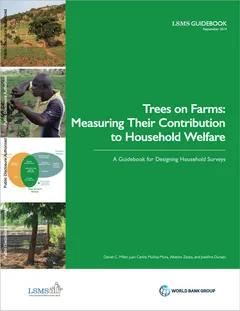
Un módulo de encuesta y caja de herramientas para integrar los árboles en fincas y la agroforestería en encuestas de hogares agrícolas y multitemáticas en países de ingreso bajo y medio.